July 12, 2026 • 16 min read
Yunnan Travel Guide: The Perfect 1-Week Itinerary for Coffee Lovers
Yunnan is China's most diverse province — and its most underrated travel destination. Snow-capped mountains, tropical jungles, ancient tea forests, and specialty coffee farms all exist within its borders. A week here will give you experiences you can't get anywhere else in China.
This itinerary is designed for first-time visitors who want to experience Yunnan's coffee culture, but also see its highlights: ancient towns, minority villages, tea mountains, and stunning natural scenery. I've tested every version of this trip over the past year — with friends, solo, and as a base for coffee farm research. This is the optimized version.
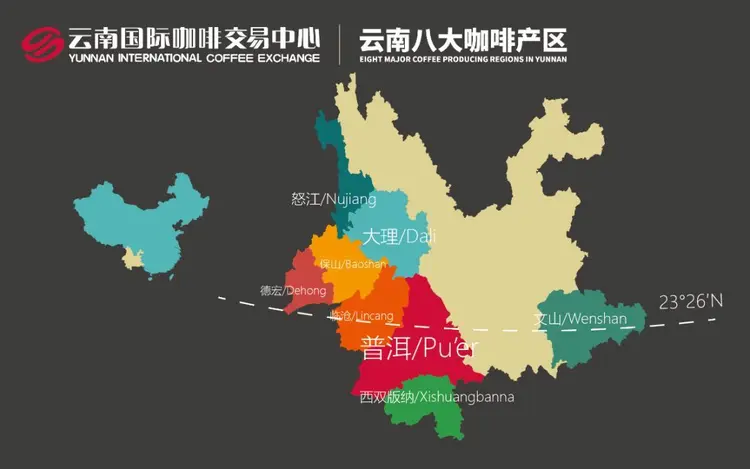
Week at a Glance
| Day | Location | Highlights | Overnight |
|---|---|---|---|
| 1 | Kunming (arrive) | Green Lake, coffee crawl, tea market | Kunming |
| 2 | Kunming → Pu'er | High-speed train (2.5h), afternoon coffee farm tour | Pu'er |
| 3 | Pu'er | Full-day farm + cupping session | Pu'er |
| 4 | Jingmai Mountain | UNESCO tea forest, gongfu ceremony | Pu'er |
| 5 | Pu'er → Dali | Train (3h), Dali old town + Erhai Lake | Dali |
| 6 | Dali | Dali countryside, Xizhou village, local coffee | Dali |
| 7 | Dali → Kunming | Morning market, afternoon train back, depart | — |
Day 1: Kunming — Coffee Crawl and Tea Market
Arrive at Kunming Changshui Airport (KMG), which connects directly to most major Asian cities and several European ones. Take the metro to the Green Lake area (Cuihu, 翠湖).
Morning/Afternoon: Drop bags and immediately start exploring. Green Lake Park itself is beautiful — a large urban lake surrounded by willow trees, with locals dancing, singing, and playing instruments. Walk south to the cluster of specialty coffee shops:
- Percher Coffee: Start here. Their Yunnan single-origin pour-over is the best in the city. ¥35-48.
- Guang Thought Coffee: A 5-minute walk away. Minimalist, quiet, ideal for settling in. Try their Yunnan cold brew.
- Manner Coffee: Shanghai chain but well-executed. Their Yunnan espresso is reliable.
Evening: Cross the street to the Green Lake Flower and Bird Market (翠湖花鸟市场). It's a chaotic, wonderful mix of tea vendors, flowers, antiques, and street food. Buy some pu'er samples for ¥50-200 per cake.
Day 2: Kunming to Pu'er — Coffee Country
Take the morning high-speed train from Kunming South to Pu'er (2.5 hours, ¥110-160 second class). The train passes through stunning karst landscape that rivals Guilin.
Arrive in Pu'er around noon. Check into a hotel near the city center (¥200-400/night is comfortable). In the afternoon, head to Torch Coffee for a half-day farm tour. They offer English-language tours, cupping sessions, and a working farm 30 minutes outside the city. Half-day tour: ¥200-300.
Evening: Try the local Yunnan food — Crossing the Bridge Noodles (过桥米线) or wild mushroom hotpot if it's in season.
Day 3: Full-Day Coffee Immersion
This is the core day for coffee lovers. Book a full-day farm experience (¥500-800). You'll:
- Walk through coffee fields and learn how Catimor and Typica varieties grow at different altitudes
- Pick ripe cherries (if November-March) and see the pulping process
- Visit the drying beds and understand how washed vs natural processing affects flavor
- Participate in a professional cupping session — taste 5-8 different Yunnan lots blind
For farms that offer hands-on experiences, contact Torch Coffee or Manlaide (Baoshan area, a longer drive from Pu'er but worth it for serious enthusiasts).
Day 4: Jingmai Mountain Tea Forest
A 2-hour drive from Pu'er takes you to Jingmai Mountain (景迈山), a UNESCO World Heritage site since 2023. This is the most impressive tea landscape in China — thousands of ancient tea trees (some 1,800+ years old) growing wild on misty mountain slopes.
Hire a guide (¥300-500 for a half-day). They'll walk you through the forest, explain how the trees are harvested, and perform a gongfu tea ceremony with leaves picked that morning. The experience is meditative and genuinely awe-inspiring — these trees were producing tea before the Ming dynasty existed.
Return to Pu'er for the night. If you have extra time, visit a local tea factory to see how pu'er cakes are pressed by hand.
Day 5: Pu'er to Dali
Take the 3-hour train from Pu'er to Dali (¥140-200). The train cuts through mountains and arrives at Dali Station, a 20-minute taxi from the old town.
Dali old town is a preserved ancient city with tiled roofs, cobblestone streets, and the towering Cangshan mountains as a backdrop. It's more touristy than Kunming but also more visually stunning. Check into a guesthouse in the old town (¥250-500/night).
Afternoon: Rent an electric scooter (¥50-80/day) and ride to Erhai Lake. The lakeside road is beautiful — 40km of cycling past farms, temples, and villages. Stop at any of the lakeside cafés for a Yunnan pour-over with a view.
Day 6: Dali Countryside
Skip the tourist traps and explore Dali's countryside. Xizhou (喜洲) village, 30 minutes north of Dali old town, is a working Bai-minority village with excellent street food and a morning market.
Buy: fresh yogurt (Dali is famous for it), rose cakes (xianhua bing), and local ham. There's a small coffee shop in Xizhou called Bai Coffee that serves Yunnan single-origin espresso.
Afternoon: Visit the Three Pagodas (¥75 entry) or hike the Cangshan cable car (¥200 round trip) for panoramic views of Erhai Lake. Skip the cable car if you're short on time — the pagodas are more rewarding.
Day 7: Departure
Take the morning high-speed train back to Kunming (2 hours, ¥145). If your flight is in the afternoon, spend your remaining time at the Kunming Tea Market (雄关堡茶叶市场) near the airport. It's the largest tea wholesale market in southwest China. Buy pu'er cakes, Yunnan black tea (dianhong), or Yunnan coffee beans for ¥100-300 per bag.
Budget Breakdown (per person, 7 days)
| Category | Budget | Mid-Range |
|---|---|---|
| Accommodation (6 nights) | ¥1,200-1,800 | ¥2,400-3,600 |
| Transport (trains + local) | ¥500-800 | ¥800-1,200 |
| Food | ¥700-1,000 | ¥1,200-1,800 |
| Coffee farm tour | ¥200-500 | ¥500-800 |
| Tea mountain guide | ¥200-400 | ¥400-600 |
| Souvenirs | ¥200-500 | ¥500-1,000 |
| Total | ¥3,000-5,000 ($420-700) | ¥5,800-9,000 ($810-1,260) |
Final Tips
- Bring cash (¥1,000-2,000). Smaller farms and rural markets don't accept cards.
- Download WeChat and Alipay before you arrive. Most urban transactions use QR codes.
- Best time to go: November-April (dry season, coffee harvest, pleasant temperatures). Avoid July-September (rainy).
- If you speak zero Mandarin, download Pleco (dictionary app) and learn basic phrases: "duōshao qián" (how much), "xièxie" (thank you), "zhè ge" (this one).
- Bring a reusable coffee cup and a small bag of your favorite Yunnan beans home — they make excellent gifts.
Frequently Asked Questions
Is one week enough for Yunnan?
One week covers the highlights (Kunming, Pu'er/coffee, Dali) comfortably. For more depth — add Lijiang (3 more days), Shangri-La (2 more days), or Xishuangbanna (3 more days).
Do I need a tour guide?
For the coffee farm tour and Jingmai Mountain, yes — a guide adds significant value. For Kunming and Dali, no — both cities are easy to explore independently using maps and translation apps.
Can I visit Yunnan coffee farms without speaking Chinese?
Torch Coffee in Pu'er has English-speaking guides. Most other farms don't. If you want to visit smaller farms, hire a translator (¥300-500/day) or join a group tour.
What should I buy as souvenirs?
Yunnan coffee beans (from the farm or Percher Coffee), pu'er tea cakes (¥100-500 at the Kunming tea market), rose cakes (xianhua bing), and Yunnan ham (Xuanwei). Avoid jade unless you know what you're doing — fakes are common.
Is Yunnan safe for solo travelers?
Extremely safe. China in general is one of the safest travel destinations, and Yunnan is no exception. Petty theft exists but violent crime is rare. The main challenge is language, not safety.
Which Should You Drink?
Drink Yunnan coffee if... you want a morning cup that works. You like chocolatey, approachable flavors. You want to support a rising specialty origin. You drink coffee every day, and you don't want to think too hard about it.
Drink pu'er tea if... you have patience. You like flavors that challenge you. You want a drink that evolves over an hour, not a minute. You're interested in aging, collecting, and the ritual of brewing. You want to feel connected to a thousand-year tradition.
Drink both if you're a curious drinker who likes variety. Coffee in the morning for the caffeine kick and flavor clarity. Pu'er in the afternoon for the calm, the complexity, and the ritual. They're not competing — they're complementary. That's what we do at Yunnan Coffee Guide.
Ready to Try One (or Both)?
Whichever side of the comparison you landed on, here are the best places to start.
As an Amazon Associate, I earn from qualifying purchases.