Tasting Guide
How to Taste Yunnan Coffee: A Complete Tasting Guide
Published: June 19, 2026 · 10 min read
From first aroma to final sip — learn to identify the unique flavors that make Yunnan specialty coffee one of the world's most exciting origins.
Yunnan coffee has a flavor profile unlike any other origin. Nestled between 1,200 and 1,800 meters above sea level, Yunnan's high-altitude terroir produces beans with a distinctive balance of bright acidity, smooth body, and remarkable sweetness.
But here's the thing: most people drink Yunnan coffee without really tasting it. They know whether they like it, but they can't describe why — or identify the specific notes that make it special.
This guide will change that. Whether you're a home brewer curious about your morning cup or a specialty coffee enthusiast looking to deepen your palate, you'll learn exactly how to taste Yunnan coffee like a professional cupper.
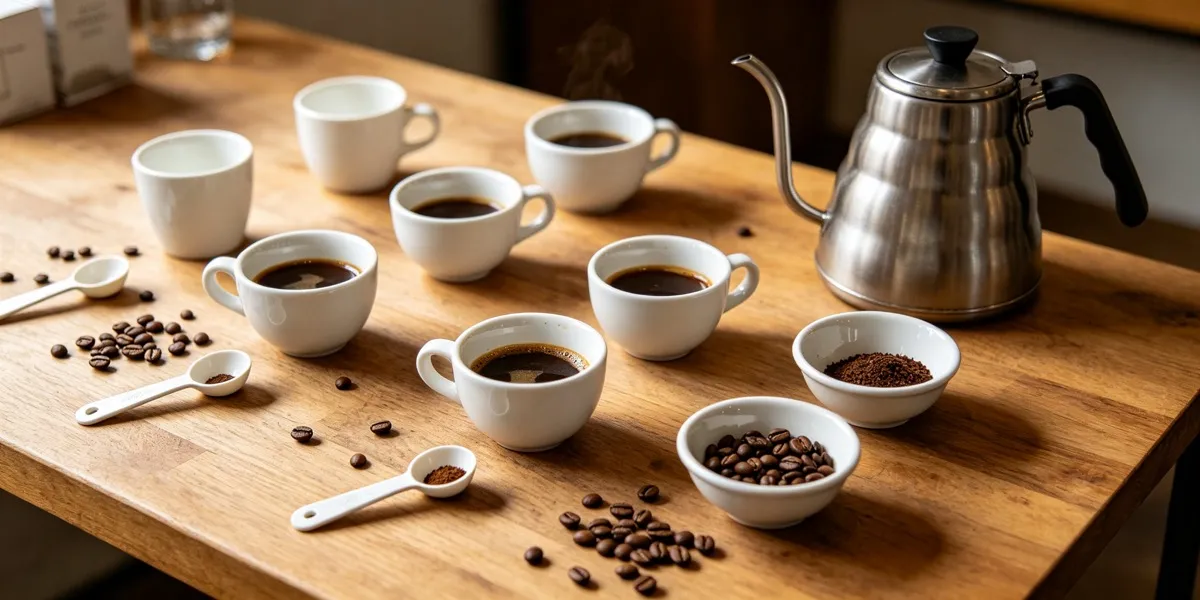
A professional cupping setup — the standard method for evaluating Yunnan specialty coffee.
Table of Contents
- What Makes Yunnan Coffee's Flavor Unique
- Yunnan Coffee Flavor Profiles by Region
- The 5-Step Yunnan Coffee Tasting Method
- How to Cup Yunnan Coffee at Home
- Common Tasting Notes in Yunnan Coffee
- Building Your Yunnan Coffee Palate
1. What Makes Yunnan Coffee's Flavor Unique
Before you can taste Yunnan coffee, you need to understand why it tastes the way it does. Three key factors shape its flavor:
🌱 Terroir: The Mountain Advantage
Yunnan's coffee-growing regions sit at altitudes of 1,200–1,800m — comparable to Colombia's best growing zones. This elevation means cooler nights, which slow cherry ripening and allow sugars to develop more fully. The result? Naturally sweeter beans with more complex acidity.
The soil tells another story. Volcanic and red loam soils rich in organic matter give Yunnan beans a distinctive earthy undertone — think dark chocolate with a hint of forest floor — that sets them apart from Latin American and African coffees.
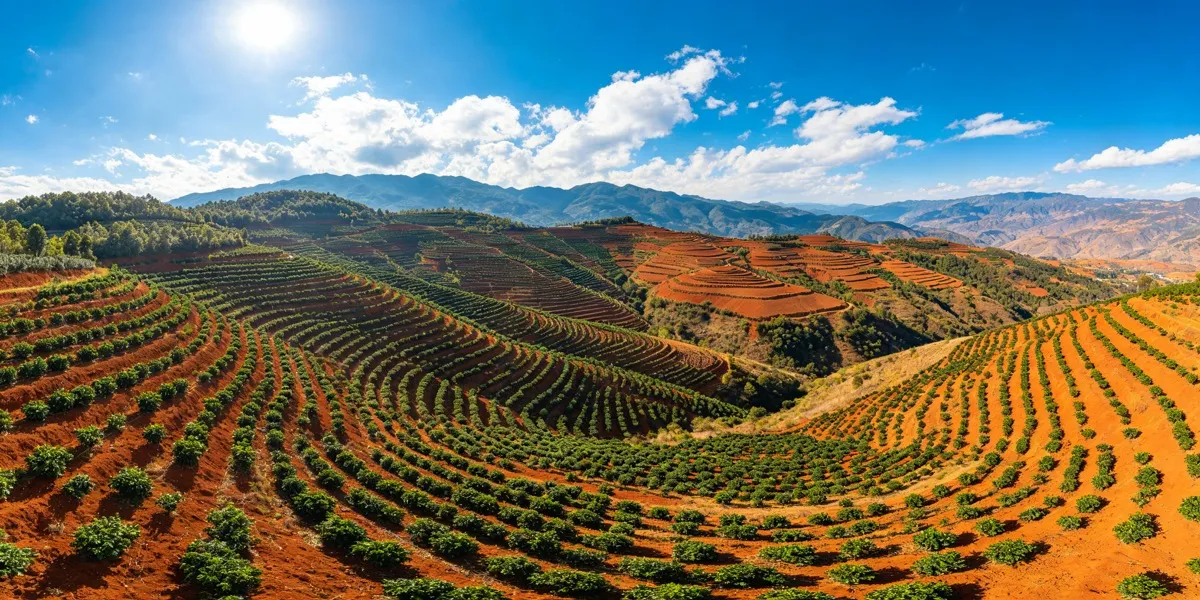
High-altitude terraced coffee plantations on Yunnan's nutrient-rich red soil. The elevation and soil create Yunnan's signature flavor.
🌤 Climate: The Subtropical Sweet Spot
Yunnan's subtropical climate means distinct wet and dry seasons. The monsoon rains arrive in May–October, followed by a dry harvest season (November–April). This dry harvest window is crucial: it allows for consistent sun-drying of coffee cherries, producing cleaner, fruitier cups compared to regions that harvest during rainy months.
🌿 Varietals: The Catimor Story (and Beyond)
For decades, Yunnan grew predominantly Catimor — a cross between Caturra and Timor that offers high yield and disease resistance. Catimor coffees are often described as having herbal, tea-like qualities with medium body and crisp acidity.
But Yunnan is changing. In recent years, farmers have planted Typica, Bourbon, Geisha, and SL28 — premium varietals that produce dramatically different flavor profiles. A Geisha from Yunnan can exhibit the same floral, jasmine-like notes as its Panamanian counterpart, while Yunnan SL28 delivers bright citric acidity reminiscent of Kenya.
2. Yunnan Coffee Flavor Profiles by Region
Not all Yunnan coffee tastes the same. Just as you wouldn't compare a Napa Cabernet to a Bordeaux, different regions within Yunnan produce distinctly different flavor profiles. Here's your guide to what each region brings to the cup:
| Region | Altitude | Key Flavors | Body | Best For |
|---|---|---|---|---|
| Pu'er | 1,200–1,600m | Dark chocolate, caramel, stone fruit | Full, creamy | Espresso blends, milk-based drinks |
| Baoshan | 1,400–1,800m | Citrus, green apple, honey | Medium, silky | Pour-over, filter coffee |
| Lincang | 1,300–1,700m | Floral, tropical fruit, brown sugar | Light to medium | Light roasts, single origin |
| Dehong | 800–1,400m | Nutty, cocoa, mild spice | Medium, smooth | Everyday drinking, blends |
Quick take: If you love bold, chocolatey coffee, start with Pu'er. If bright, fruity acidity is your thing, go Baoshan. For complex, floral notes, Lincang is your region. Dehong offers a smooth, approachable cup perfect for daily drinking.
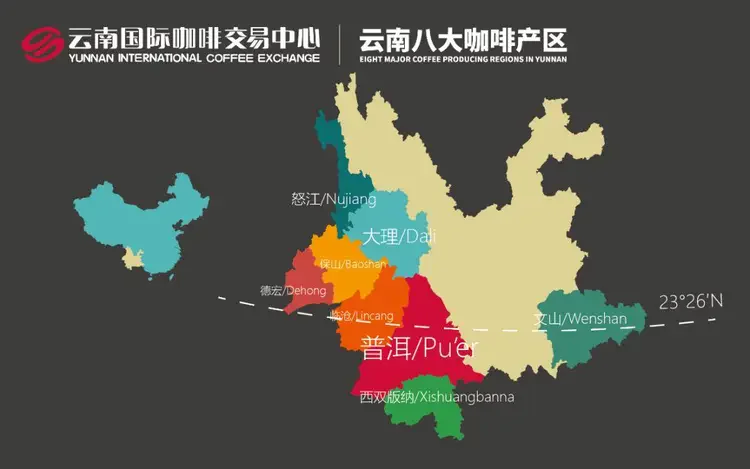
Yunnan's four major coffee regions — each produces a distinct flavor profile.
3. The 5-Step Yunnan Coffee Tasting Method
Professional coffee cuppers use a structured approach to evaluate coffee. You don't need a lab — just a cup of freshly brewed Yunnan coffee and your senses. Here's the method:
Smell the Dry Grounds
Before adding water, inhale the aroma of your freshly ground Yunnan coffee. What do you notice? Chocolate? Nuts? Flowers? Write it down.
Smell the Wet Aroma
After adding hot water (195–205°F), put your nose close and inhale deeply. The wet aroma reveals notes that dry grounds hide — especially fruit and floral characteristics.
Slurp Loudly
Slurping aerates the coffee across your entire palate. Don't be shy — professional cuppers slurp with purpose. This activates your retro-nasal olfactory senses, unlocking the full flavor spectrum.
Identify the Flavor Notes
As the coffee coats your tongue, ask: Is it sweet or bitter? Fruity or nutty? What's the acidity like — sharp like lemon or smooth like apple?
Note the Finish
After swallowing, pay attention to the aftertaste. How long does the flavor linger? Yunnan coffees typically have a long, clean finish with chocolate or honey notes that last 15–30 seconds.
4. How to Cup Yunnan Coffee at Home
Cupping is the industry standard for evaluating coffee quality. It removes the variables of different brewing methods and lets you taste the bean itself, pure and unfiltered. Here's how to do it with Yunnan coffee:
What You'll Need
- • 12g of freshly roasted Yunnan coffee (coarsely ground)
- • 200ml hot water at 200°F (93°C)
- • A cupping bowl or wide-mouthed cup
- • A cupping spoon (or a large soup spoon)
- • A cup of water for cleansing your palate
- • A tasting journal or notes app
The Cupping Process
- Grind & Smell: Grind the coffee and place it in the bowl. Smell the dry aroma.
- Pour Water: Pour hot water over the grounds. Start your timer for 4 minutes.
- Smell Crust: The grounds will form a crust on top. Smell it — this is the most aromatic moment.
- Break the Crust: After 4 minutes, stir the crust with your spoon. Smell again as the aroma releases.
- Skim the Grounds: Skim off the floating grounds with two spoons.
- Slurp & Evaluate: Let the coffee cool to about 160°F (70°C). Slurp and evaluate.
- Continue as it Cools: Taste at 160°F, 130°F, and 100°F. Flavor changes as coffee cools — Yunnan coffees often reveal sweetness more clearly at lower temperatures.
5. Common Tasting Notes in Yunnan Coffee
Over hundreds of cuppings, Yunnan coffees consistently exhibit certain flavor profiles. Here's what to expect — and what to look for:
Most Common Flavor Notes
Yunnan Coffee Flavor Profile
Flavor Notes by Processing Method
How the coffee is processed dramatically changes its flavor:
| Processing | Typical Yunnan Flavor Notes | Acidity Level | Body |
|---|---|---|---|
| Natural (Dry) | Berries, tropical fruit, wine-like, fermented | Low-Medium | Full, syrupy |
| Washed | Citrus, green apple, honey, floral | Medium-High | Clean, medium |
| Honey | Caramel, stone fruit, brown sugar, tea | Medium | Silky, medium-full |
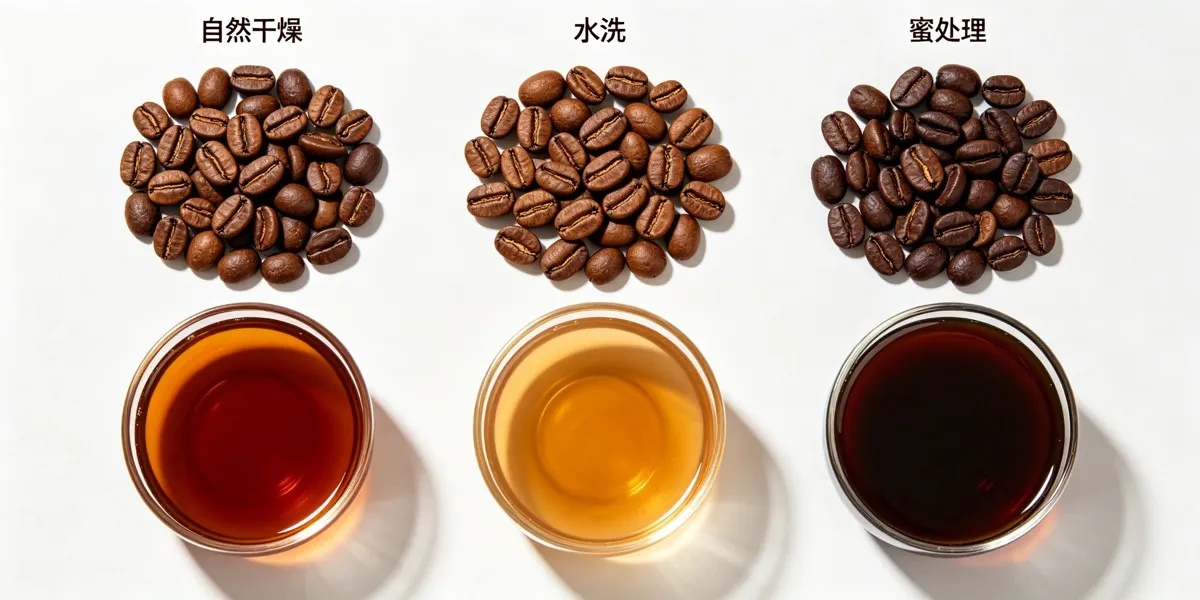
Natural, washed, and honey-processed Yunnan coffee — each method produces a distinctly different cup.
6. Building Your Yunnan Coffee Palate
Tasting coffee is a skill. Like training a wine palate, your coffee palate improves with deliberate practice. Here's how to accelerate your learning with Yunnan coffee specifically:
🔬 Side-by-Side Tastings
Buy two Yunnan coffees from different regions (Pu'er and Baoshan, for example). Brew them the same way and taste them together. The differences will jump out at you in a way they never would if you tasted them on separate days.
📊 Try All Three Processing Styles
If you can find it, buy Yunnan coffee in all three processing methods — natural, washed, and honey — from the same farm. Tasting the same beans processed differently is the fastest way to understand how processing affects flavor.
☕ Vary Your Brew Method
The same Yunnan coffee will taste different through a pour-over vs. a French press vs. espresso. Each method extracts different compounds. Experimenting with brew methods reveals new dimensions of the same bean — depth you miss when you only drink it one way.
Start Tasting
Yunnan coffee is one of the most exciting origins in the specialty coffee world right now. Its unique combination of high-altitude terroir, diverse processing traditions, and rapidly improving quality makes it a perfect bean for training your palate.
The more you taste — and the more deliberately you taste — the more you'll discover. A Yunnan coffee you thought was simple last month might reveal layers of complexity this month. That's not the coffee changing. That's you getting better at tasting.
Your first step? Grab a bag of single-origin Yunnan coffee and run through the 5-step method above. Even if you only identify two or three notes, you're already tasting better than 99% of coffee drinkers.
🛒 Try These Yunnan Coffees for Your Tasting
Ready to practice? These are our recommended Yunnan beans for home cuppings:
- Pu'er Single Origin (Washed) — Classic Yunnan profile. Great for your first cupping session.
- Baoshan Honey Process — A perfect contrast to washed Pu'er. Notice the difference in body and sweetness.
- Yunnan Natural Process Sampler — For experiencing the fruity, wine-like side of Yunnan coffee.
As an Amazon Associate we earn from qualifying purchases.