Published: June 18, 2026 · Reading time: 8 min
One of the most exciting things about Yunnan coffee right now is the explosion of processing methods. A decade ago, most Yunnan beans were washed or low-grade natural. Today, you'll find everything from experimental anaerobics to carbonic maceration.
Processing method is arguably the biggest factor in how your coffee tastes — sometimes more than the varietal or even the farm. For Yunnan specifically, the same beans from the same plot can taste completely different depending on how they're processed.
Here's what each method does, and how to choose.
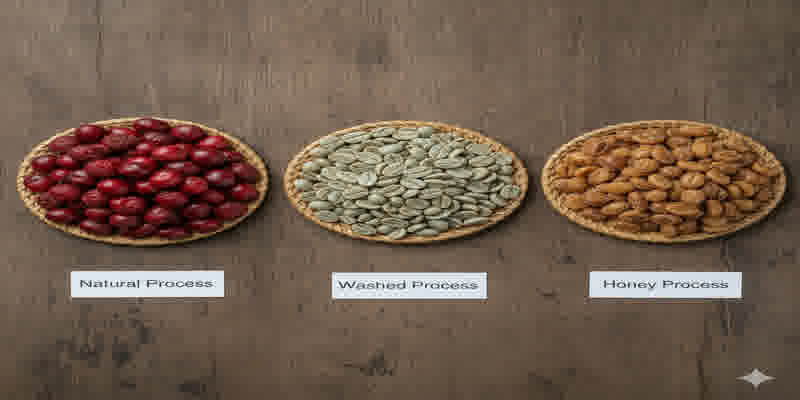
The 3 Main Processing Methods
☀️ Natural (Dry) Process
How it works: The whole coffee cherry is dried in the sun with the fruit still attached to the bean. After 2–4 weeks of drying, the dried fruit is removed mechanically.
Flavor profile: Fruity, wine-like, fermented sweetness. Think: dried cherry, raisin, tropical fruit, rum.
🍒 Dried cherry 🍇 Raisin 🥭 Tropical fruit 🍷 Wine-like
💧 Washed (Wet) Process
How it works: The cherry skin and pulp are removed immediately after harvesting. The beans (still in parchment) are fermented in water for 12–36 hours, then washed clean and dried.
Flavor profile: Clean, bright, tea-like. Higher acidity, more delicate flavors. Think: citrus, green apple, jasmine, milk chocolate.
🍋 Citrus 🍏 Green apple 🌼 Jasmine 🍫 Milk chocolate
🍯 Honey Process
How it works: A hybrid method — the cherry skin is removed, but some of the sticky mucilage (the "honey") is left on the bean during drying. The amount of mucilage left determines whether it's yellow, red, or black honey process.
Flavor profile: Sweet, syrupy, balanced. More body than washed, cleaner than natural. Think: brown sugar, caramel, stone fruit, almond.
🍯 Honey 🍑 Peach 🍫 Caramel 🥜 Almond
Comparison: Which Should You Buy?
| Method | Body | Acidity | Sweetness | Best For |
|---|---|---|---|---|
| Washed | Light-medium | Medium-high | Mild | Pour-over, Aeropress |
| Honey | Medium | Medium | High | Pour-over, espresso |
| Natural | Full | Low | Very high | French press, cold brew |
Beyond the Basics: Experimental Methods
Yunnan's specialty producers are increasingly experimenting with:
Anaerobic Natural
Beans are fermented in sealed, oxygen-free tanks before drying. This produces intense fruity and funky flavors — think: passion fruit, yogurt, blueberry. Yunnan anaerobics have won multiple awards in recent years. Not for beginners, but fascinating if you want to taste what Yunnan's best producers are capable of.
Carbonic Maceration
Borrowed from winemaking — whole cherries are fermented in a CO₂ environment. Yunnan carbonic maceration lots are rare and expensive ($20–30/lb), but some roasters call them the most interesting coffee coming out of China right now.
Our Recommendation
First-time Yunnan buyer: Start with a washed Yunnan. It's the most approachable and shows you the origin's baseline quality.
Already a fan: Try a honey process Yunnan from Pu'er. This is where Yunnan really stands out against other origins.
Adventurous: Find an anaerobic natural from a producer like Torch Coffee or Mánhào. You won't mistake it for anything else.
Also read: How to Brew Yunnan Coffee → and What is Yunnan Coffee? →