When people talk about Yunnan coffee, they often treat it as one thing. But Yunnan is a province the size of France, with dramatically different microclimates, altitudes, and soil types.
The coffee grown in Baoshan tastes nothing like the coffee from Pu'er — and that's exactly why Yunnan is one of the most exciting emerging coffee origins in the world.
In this guide, we'll take you through Yunnan's four major coffee regions, what makes each one unique, and how to choose beans based on where they're grown.
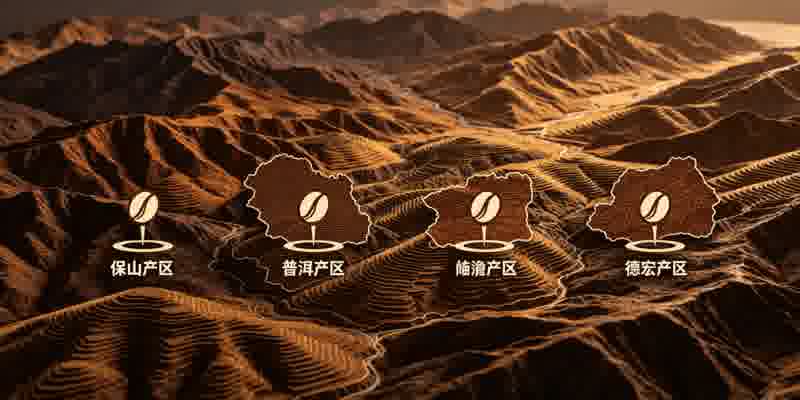
At a Glance: Yunnan's Coffee Regions
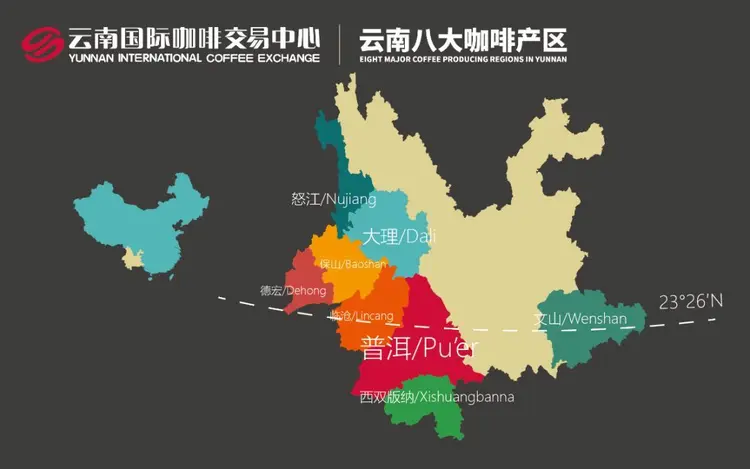
| Region | Altitude | Production | Signature Flavor |
|---|---|---|---|
| Baoshan (保山) | 1,000–1,600m | ~30% | Nutty, chocolate, full body |
| Pu'er (普洱) | 800–1,400m | ~45% | Bright acidity, fruity, clean |
| Lincang (临沧) | 1,000–1,500m | ~15% | Sweet, balanced, floral notes |
| Dehong (德宏) | 800–1,300m | ~10% | Mild, soft, tea-like |
1. Baoshan (保山) — Where It All Began
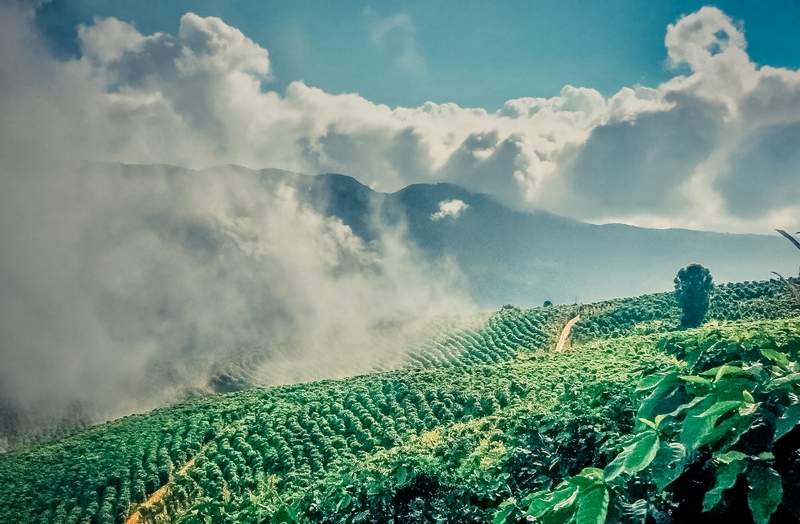
Baoshan is the birthplace of Yunnan's coffee industry. Located in western Yunnan near the Myanmar border, this region was where the first successful coffee plantations were established in the 1950s.
Geography & Climate
- Altitude: 1,000–1,600m above sea level
- Temperature: 15–24°C year-round
- Rainfall: 1,000–1,500mm annually
- Key sub-regions: Lujiangba (潞江坝), Gaoligong Mountain foothills
Flavor Profile
Baoshan coffee is known for its rich body and comforting flavors:
🍫 Dark chocolate 🥜 Roasted nuts 🍯 Caramel sweetness ☕ Full mouthfeel
- Low to medium acidity
- Full mouthfeel with a clean finish
- Often described as "comfortable" — easy to drink, hard to put down
Best for: Espresso blends, dark roasts, cold brew
2. Pu'er (普洱) — The Rising Star
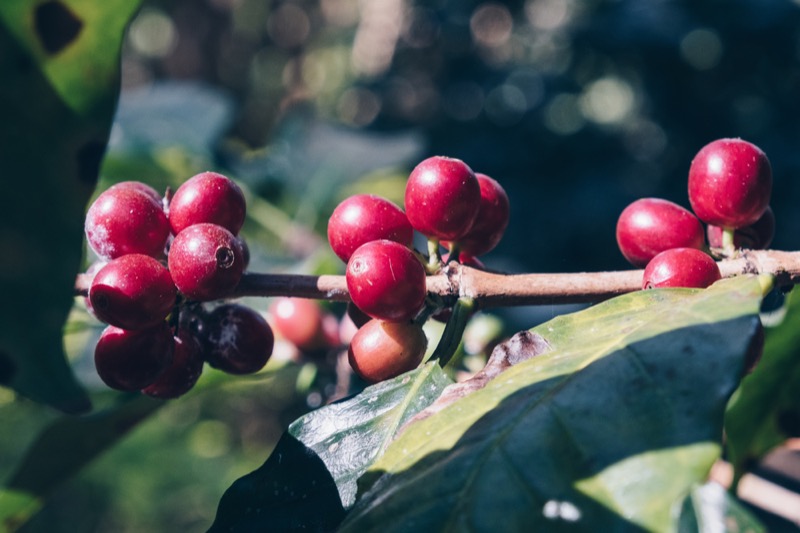
Pu'er is already famous for its aged tea, but it's rapidly becoming the most important coffee region in China. With the highest production volume and most investment in quality improvement, Pu'er is where Yunnan's specialty coffee revolution is happening.
Geography & Climate
- Altitude: 800–1,400m (some farms reach 1,600m)
- Temperature: 18–25°C
- Rainfall: 1,200–1,800mm
- Key sub-regions: Ning'er (宁洱), Simao (思茅), Jiangcheng (江城)
Flavor Profile
Pu'er coffee is remarkably different from Baoshan — brighter, more complex, and more "specialty":
🍑 Stone fruit 🍊 Citrus 🍏 Green apple 🌸 Floral honey
- Medium to high acidity (think washed Ethiopian but gentler)
- Clean, tea-like body
- Floral and honey sweetness
Best for: Pour-over, filter coffee, light to medium roasts
3. Lincang (临沧) — The Sweet Spot
Lincang sits between Baoshan and Pu'er, both geographically and in flavor profile. It's a relatively smaller producing region, but the quality-to-volume ratio is impressive.
Geography & Climate
- Altitude: 1,000–1,500m
- Temperature: 16–24°C
- Rainfall: 1,100–1,500mm
- Key sub-regions: Cangyuan (沧源), Fengqing (凤庆), Yongde (永德)
Flavor Profile
Lincang coffee finds the sweet spot between Baoshan's nutty richness and Pu'er's bright fruitiness:
🟤 Brown sugar 🍯 Honey 🌸 Jasmine 🍫 Cocoa
- Medium acidity — balanced, not overpowering
- Silky body with a long, sweet finish
- Notes of dried fruit and cocoa
Best for: Medium roasts, all-purpose brewing (drip or espresso)
4. Dehong (德宏) — The Gentle Giant

Dehong prefecture borders Myanmar to the west and shares many cultural and agricultural similarities with Northern Thailand. Its coffee tends to be more approachable — perfect for introducing someone to Yunnan coffee for the first time.
Geography & Climate
- Altitude: 800–1,300m
- Temperature: 18–26°C
- Rainfall: 1,400–1,800mm
- Key sub-regions: Luxi (芒市), Ruili (瑞丽), Longchuan (陇川)
Flavor Profile
Dehong coffee is the mildest of the four regions:
🥛 Milk chocolate 🌰 Toasted almonds 🍍 Tropical fruit hints 🍵 Tea-like finish
- Low acidity, smooth body
- Very clean finish — almost tea-like in clarity
- Hints of sugarcane and macadamia nut
Best for: Beginners, milk-based drinks, casual drinking
How to Choose Yunnan Coffee by Region
Quick Decision Guide
| If you drink… | Choose coffee from… |
|---|---|
| Espresso or cold brew | Baoshan — bold, chocolatey, low acidity |
| Pour-over or filter | Pu'er — bright, fruity, complex |
| Everything | Lincang — balanced, sweet, versatile |
| Milk drinks or beginners | Dehong — mild, smooth, approachable |
Note: Pu'er specialty beans typically cost 20–40% more than Baoshan commercial beans, reflecting higher altitude and processing investment.
Seasonal Availability
Yunnan's coffee harvest runs from November to March, with peak harvest in December–January. The fresh crop starts shipping in February–March, and by May most roasters are selling current-harvest beans.
February–April: Best time for fresh crop — peak freshness
May–August: Good quality, slight flavor evolution as beans rest
September–October: Previous harvest (still good, but start looking for new crop announcements)
Frequently Asked Questions
Which Yunnan region produces the highest quality coffee?
Most specialty roasters agree that Baoshan's high-altitude farms and Pu'er's rising specialty sector produce the best quality. Pu'er has more upside potential due to recent investments in processing infrastructure.
Is there a "best" region for espresso?
Baoshan — the heavy body, chocolate notes, and low acidity make it ideal for espresso blends.
Does region matter more than processing method?
Both matter. Region determines the bean's base character; processing (washed vs natural vs honey) controls how that character is expressed. A washed Pu'er and a natural Pu'er can taste completely different.
Where can I buy single-region Yunnan coffee?
See our Yunnan Coffee Buying Guide for recommended roasters and beans organized by region.

Final Thoughts
Yunnan is not a monolith. Baoshan, Pu'er, Lincang, and Dehong each produce distinct coffees shaped by their unique geography. Treating Yunnan as one "origin" is like treating Burgundy as one wine region — you miss everything that makes it special.
Next time you buy Yunnan beans, check the label for the specific region. Try tasting them side by side. You'll never think of Yunnan coffee as "just one thing" again.