History & Culture
Yunnan Coffee History: From 1892 to Today
How a French missionary's coffee trees sparked China's specialty coffee revolution — the remarkable 130-year story of Yunnan coffee.
Most people don't think of China when they think of coffee. Italy, Colombia, Ethiopia — those are the names that come to mind. But tucked away in China's southwestern province of Yunnan, a quiet coffee revolution has been brewing for over a century.
Today, Yunnan produces 99% of China's coffee and ranks among the world's most exciting emerging specialty coffee origins. In 2024 alone, Yunnan exported over 30,000 tons of coffee to more than 40 countries, with exports growing nearly 30% year-over-year.
But this success didn't happen overnight. The story of Yunnan coffee spans 130 years — from a single French missionary's coffee trees to a billion-dollar industry that's changing how the world thinks about Chinese coffee.
Here's the complete story.

Yunnan's mountainous landscape — coffee has been grown here for over a century.
Table of Contents
- 1892: The French Missionary and the First Coffee Trees
- 1950s–1980s: State Farms and the Long Sleep
- 1988: Nestlé and the Modern Era Begins
- 2010s: The Specialty Coffee Awakening
- Yunnan Coffee Today: By the Numbers
- Yunnan Coffee Culture: Tea Country Embraces Coffee
- The Future of Yunnan Coffee
1. 1892: The French Missionary and the First Coffee Trees
The story of Yunnan coffee begins in a small village called Zhukula (朱苦拉), deep in the mountains of what is now Yunnan's Binchuan County. It was 1892, and a French missionary named Father Alfred Liétard had traveled to this remote corner of China to establish a Catholic mission.
Liétard brought with him something unusual — coffee seeds from Vietnam. He planted them on the mission grounds, and they took to Yunnan's climate with surprising vigor. Within a few years, the trees were producing cherries, and the local villagers were introduced to something they'd never tasted before: coffee.
Those original trees — some of which are still alive today at over 130 years old — became the foundation of Yunnan's coffee industry. The villagers of Zhukula learned to grow, harvest, and process coffee. They roasted the beans in woks over open fires and brewed them in clay pots, creating a rustic local coffee tradition that continued quietly for decades.
Zhukula's legacy: The village still produces coffee from those original Arabica trees. In 2022, a specialty roaster paid over $100 per kilogram for beans harvested from these historic trees — an incredible price for Yunnan coffee at the time, reflecting both the quality and the heritage value of this living piece of history.

The descendants of those 1892 coffee trees still grow across Yunnan today.
2. 1950s–1980s: State Farms and the Long Sleep
For the first half of the 20th century, Yunnan coffee grew in scattered pockets — mission gardens, small family plots, and a few larger plantations established by Chinese entrepreneurs returning from Southeast Asia.
The biggest pre-1949 operation was in Pu'er (then called Simao), where an overseas Chinese businessman named Hu Wenxi established a coffee plantation covering over 200 acres. But political turbulence, war, and economic isolation meant Yunnan coffee remained a curiosity rather than an industry.
The State Farm Era
After 1949, the Chinese government consolidated agricultural production into state farms. Coffee was included in this system, and Yunnan's first state-run coffee farms were established in the 1950s. These farms focused on quantity over quality, growing robusta (a hardier, more bitter species) for export to the Soviet bloc.
For decades, Yunnan coffee was a low-priority crop. The land was better suited for tea, rubber, and sugarcane — crops with established markets and familiar cultivation techniques. Most farmers didn't know how to properly process coffee, and the quality suffered accordingly.
The result? Yunnan coffee developed a reputation as low-grade, bitter, and inconsistent. It was used primarily in instant coffee blends and sold to Eastern Bloc countries at rock-bottom prices. Few people outside of China — and few even within it — knew that Yunnan grew coffee at all.
The Great Expansion of the 1980s
In the 1980s, the World Bank funded a major coffee development project in Yunnan. The goal was to plant 30,000 hectares of coffee and modernize processing infrastructure. But the project struggled — coffee prices crashed globally in 1989, and many of the newly planted farms were abandoned or converted to other crops.
By 1990, Yunnan's coffee industry was at a crossroads. It had survived for a century, but it had never truly thrived.
3. 1988: Nestlé and the Modern Era Begins
The turning point came in 1988, when Nestlé entered China and established an agricultural service team in Yunnan. The company saw an opportunity: China's massive population was just beginning to develop a taste for coffee, and Nestlé wanted a local supply chain to feed its instant coffee production.
Nestlé's approach was revolutionary for Yunnan:
- Free technical training for farmers on cultivation, harvesting, and processing
- Guaranteed purchase prices — farmers knew they'd have a buyer
- Introduction of higher-quality Arabica varietals like Catimor, replacing older robusta varieties
- Development of a coffee grading system that rewarded quality
This Nestlé Agricultural Service (NAS) program was the single most important catalyst for Yunnan's coffee industry. By creating a reliable market and sharing technical knowledge, Nestlé turned coffee from a gamble into a dependable cash crop for tens of thousands of farming families.
By the early 2000s, Nestlé was purchasing over 10,000 tons of Yunnan coffee annually, and the province's coffee acreage had expanded dramatically. The quality improved year by year as farmers learned better techniques and invested in their farms.
Today, Nestlé remains a major buyer of Yunnan coffee, though the industry has diversified far beyond any single company. The seeds of modernization that Nestlé planted in 1988 have grown into a forest.
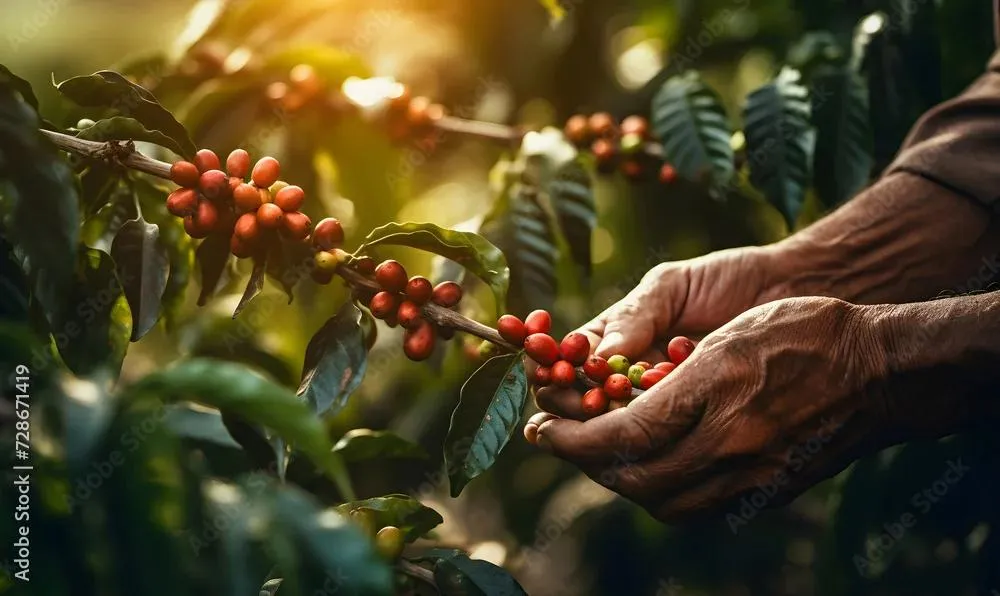
Selective harvesting of ripe coffee cherries — a practice Nestlé's training programs helped standardize across Yunnan.
4. 2010s: The Specialty Coffee Awakening
The 2010s marked the most dramatic period of change in Yunnan coffee's history. Three forces converged to transform the industry from a commodity producer into a specialty coffee origin:
☕ China's Coffee Boom
China's coffee consumption was growing at 15–20% per year — the fastest rate in the world. Starbucks, Luckin, Manner, and Seesaw were opening hundreds of new stores each year. By 2023, China had over 50,000 coffee shops, and demand for high-quality domestic beans was surging.
Chinese consumers, especially in Shanghai, Beijing, and Shenzhen, were becoming sophisticated about coffee. They wanted to know where their beans came from. And when they discovered that Yunnan — their own backyard — produced world-class specialty coffee, the homegrown pride factor kicked in.
🌱 New Varietals and Processing Innovation
In the 2010s, progressive Yunnan farmers began experimenting with premium varietals — Typica, Bourbon, Geisha, and SL28. They adopted modern processing techniques: controlled fermentation, raised bed drying, and experimental anaerobic processing.
International coffee experts took notice. In 2018, a Yunnan Geisha from the Menglian region scored 87.5 points in a professional cupping — competitive with top Geishas from Panama. The same year, a Yunnan coffee won the prestigious China Coffee Competition with a score of 88.25.
Suddenly, specialty coffee buyers from Japan, South Korea, Europe, and the United States were visiting Yunnan farms. They found terroir-driven coffees with distinctive profiles — creamy body, chocolate sweetness, and a unique herbal complexity that no other origin could replicate.
🏆 The COE Breakthrough
The biggest milestone came in 2021, when Yunnan participated in the Cup of Excellence (COE) — one of the most prestigious coffee quality competitions in the world. After technical evaluations by COE quality-control experts from Colombia, Ethiopia, Brazil, and other origins, Yunnan was certified to host its own COE competition.

Professional cupping sessions like this one helped Yunnan specialty coffee earn scores competitive with top origins worldwide.
The first Yunnan COE auction in 2021 saw the winning lot sell for $60 per pound — a record price for Chinese coffee. By 2023, COE Yunnan lots were consistently fetching prices comparable to top coffees from Central America and East Africa.
5. Yunnan Coffee Today: By the Numbers
Here's the scale of Yunnan's coffee industry in 2025–2026:
| Metric | Value |
|---|---|
| China's coffee production share | 99% |
| Annual production | ~150,000 tons (green beans) |
| Planting area | ~150,000 hectares |
| Farmer households involved | ~400,000 |
| Export value (2024) | ~$500 million |
| Export growth (YoY) | ~30% |
| Major export markets | EU, Japan, South Korea, US, Southeast Asia |
| Specialty grade share | ~15% (and rising fast) |
The shift from commodity to specialty is accelerating. Just five years ago, nearly all Yunnan coffee was sold as commercial-grade beans for instant coffee and blends. Today, an increasing share is being roasted as single-origin specialty coffee, sold in cafes from Shanghai to Seoul.
6. Yunnan Coffee Culture: Tea Country Embraces Coffee
Yunnan is China's most famous tea-producing province — Pu'er tea alone is a billion-dollar industry. So how did coffee find a home in the heart of tea country?
An Ancient Tea-and-Coffee Region
The answer lies in Yunnan's geography. The same conditions that make Yunnan ideal for tea — high altitude, mild climate, nutrient-rich soil — also happen to be perfect for Arabica coffee. In many parts of Yunnan, coffee and tea grow side by side on the same mountain slopes.
In Binchuan County, near Zhukula, locals have been drinking coffee for over a century. Their coffee tradition is uniquely Chinese: beans are roasted in a wok with butter and sugar, then ground and brewed in a clay pot. The resulting drink is strong, sweet, and rich — closer to Vietnamese coffee than to a Western espresso.
☕ The Rise of Yunnan Coffee Tourism
In recent years, coffee tourism has boomed in Yunnan. Travelers visit coffee farms in Pu'er and Baoshan, stay at farmstays, and participate in cherry-picking and cupping sessions. The Yunnan Coffee Festival draws thousands of visitors each year, featuring farm tours, barista competitions, and cupping workshops.
This tourism is building a cultural bridge. Chinese tea drinkers who visit coffee farms often become coffee drinkers. International coffee lovers who visit Yunnan discover a region with a unique coffee heritage. The cultural exchange is reshaping how people think about both tea and coffee in China.
🇨🇳 Yunnan Coffee in Chinese Cafes
Walk into any specialty coffee shop in Shanghai or Beijing, and you'll likely see Yunnan single-origin beans on the menu. Chinese roasters are increasingly proud to showcase domestic coffee. It's become a badge of quality — "This is ours, and it's world-class."
Yunnan coffee has even found its way into Xiaomi smart coffee machines, and Luckin has a dedicated Yunnan single-origin offering. The journey from a missionary's backyard to a nation's coffee cups is nearly complete.
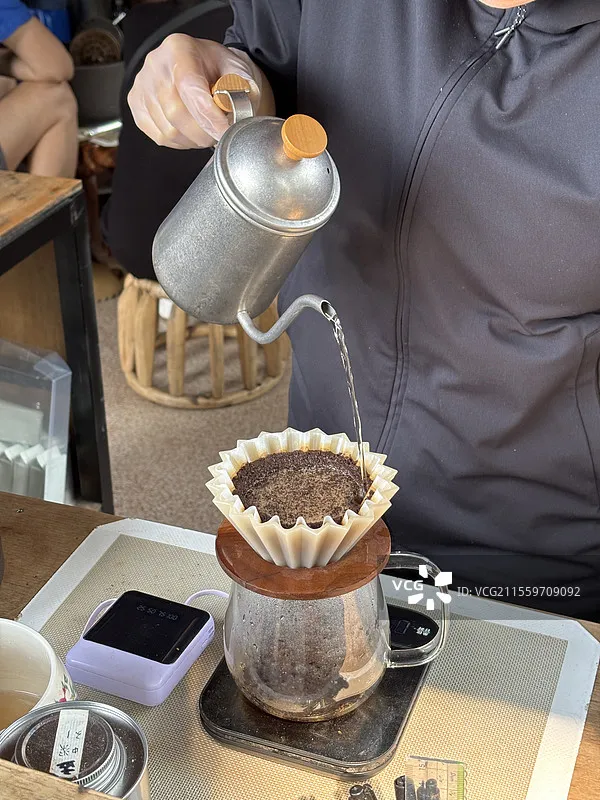
Specialty coffee culture in China's cities has driven demand for Yunnan single-origin beans.
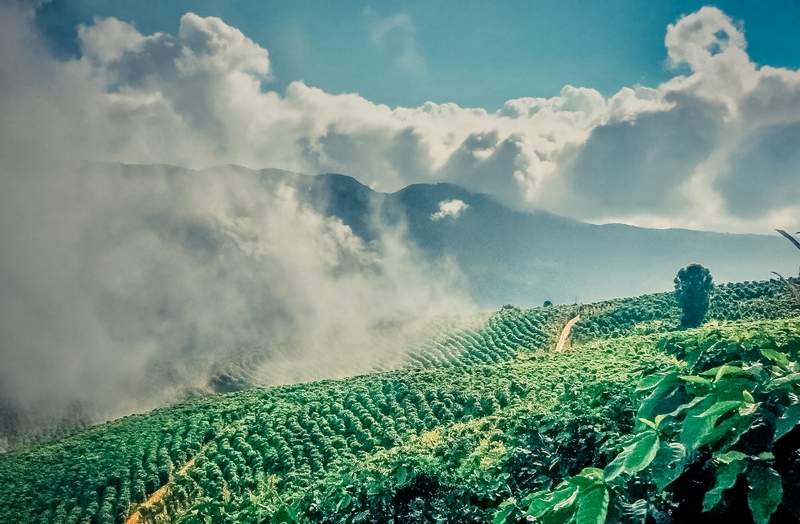
A modern Yunnan coffee farm — far removed from the rustic plots of a century ago.
7. The Future of Yunnan Coffee
Where is Yunnan coffee headed? Here are the trends shaping the next decade:
📈 Quality Over Quantity
Farmers are increasingly pulling out low-yielding or low-quality trees and replanting with premium varietals. The government supports this through subsidies for high-quality planting material. By 2030, analysts predict that specialty-grade Yunnan coffee could represent 30–40% of total production.
🌍 Direct Trade and Farm Recognition
International roasters like Counter Culture, Onyx, and La Colombe have visited Yunnan and are establishing direct-trade relationships with farms. This means higher prices for farmers and better traceability for consumers. Individual Yunnan farms are beginning to build brand recognition — just like Finca El Injerto in Guatemala or Gesha Village in Ethiopia.
🤝 Climate Adaptation
Climate change is forcing coffee-growing regions worldwide to adapt. Yunnan has a potential advantage: mountainous terrain with a wide range of microclimates at different elevations. As temperatures rise, farmers can move to higher slopes. Research centers in Yunnan are also developing climate-resilient varietals that maintain quality under warmer conditions.
☕ The Export Boom Continues
Yunnan's coffee exports are growing rapidly through the China-Europe Railway Express, which ships Yunnan coffee to European markets in just 15 days — half the time of ocean freight. The provincial government has set a target of $1 billion in coffee export value by 2028.
Explore More About Yunnan Coffee
Now that you know the history, deepen your knowledge with our other guides:
- What is Yunnan Coffee? A Complete Introduction — Start with the basics of Yunnan's coffee profile.
- Yunnan Coffee Regions Guide — Explore the four major growing regions in detail.
- Best Yunnan Coffee Beans Buying Guide — Find the best beans to taste the history yourself.
Continue Reading
- • What is Yunnan Coffee? A Complete Introduction
- • Yunnan Coffee Regions Guide: Baoshan to Pu'er
- • Natural vs Washed vs Honey Processed Yunnan Coffee
- • How to Taste Yunnan Coffee: A Complete Tasting Guide
- • How to Brew Yunnan Coffee: Best Methods for Any Skill Level
- • Yunnan vs Colombian Coffee: A Complete Comparison
- • Best Yunnan Coffee Beans Buying Guide