If you've ever browsed a specialty coffee menu, you've seen the same names over and over: Ethiopia. Brazil. Colombia. These are the titans — the origins that define what specialty coffee means.
And then there's Yunnan — a newcomer appearing on more roastery shelves every year. If you've read our Yunnan vs Colombia comparison, you already know how Yunnan stacks up against one of coffee's most famous origins. But how does it compare to the other heavyweights?
In this guide, we'll put Yunnan side by side with Ethiopia and Brazil — two completely different coffee worlds. One is the birthplace of Arabica itself. The other is the world's largest coffee producer. And Yunnan? It sits somewhere in between, carving out its own distinct identity.
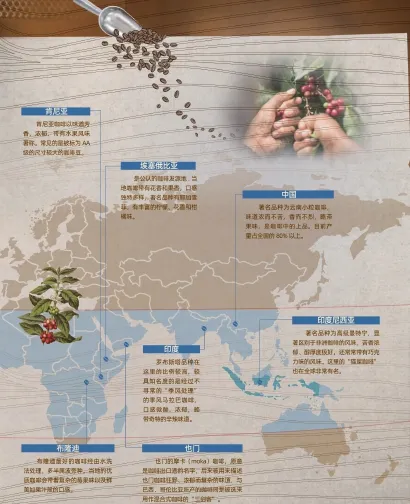
Three of the world's most important coffee origins — Ethiopia (birthplace), Brazil (largest producer), and Yunnan (rising star).
At a Glance: Three Origins Compared
| 🇪🇹 Ethiopia | 🇧🇷 Brazil | 🇨🇳 Yunnan | |
|---|---|---|---|
| Location | Equatorial East Africa | Tropical South America | Subtropical Southwest China |
| Annual Production | ~7.5 million bags | ~55 million bags | ~2.3 million bags |
| Global Rank | #5 | #1 | ~#14 |
| Altitude | 1,500–2,300m | 800–1,400m | 800–1,800m |
| Primary Varieties | Heirloom (thousands) | Mundo Novo, Catuaí, Bourbon | Catimor (80%+), Typica, Geisha |
| Dominant Process | Washed (specialty) / Natural (traditional) | Pulped Natural, Natural | Washed, Natural, Honey, Anaerobic |
| Acidity | High to Very High | Low to Medium | Low to Medium |
| Body | Light to Medium | Full | Medium to Full |
| Flavor Complexity | Extremely High | Moderate | Moderate to High |
| Avg. Specialty Price | $18–45/lb | $12–22/lb | $10–20/lb |
| Coffee History | ~1,000+ years | ~300 years | ~40 years (modern) |
Flavor Profile: What's in the Cup?
This is where the three origins diverge most dramatically. If you were blindfolded and handed a cup from each, you wouldn't just taste the difference — you'd taste three completely different coffee philosophies.
☕ Yunnan Smooth & Comforting
- Chocolate & Cocoa — The dominant note
- Nutty — Almond, hazelnut
- Caramel & Brown Sugar — Gentle sweetness
- Tea-like Herbal — A subtle Yunnan signature
- Low to Medium Acidity — Smooth, easy-drinking
- Medium to Full Body — Satisfying weight
🇪🇹 Ethiopia Bright & Complex
- Floral — Jasmine, lavender, rose
- Citrus — Lemon, bergamot, orange
- Stone Fruit — Peach, apricot
- Berry — Blueberry, strawberry (natural process)
- High to Very High Acidity — Wine-like, tea-like
- Light to Medium Body — Delicate, elegant
🇧🇷 Brazil Bold & Comforting
- Chocolate — Milk to dark, consistent
- Nutty — Peanut, almond
- Caramel — Sweet, buttery
- Dried Fruit — Raisin, prune (natural process)
- Low Acidity — Creamy, smooth
- Full Body — Heavy, syrupy
The simplest way to think about it:
- Ethiopia is like a complex tea — bright, floral, ethereal. It demands your attention.
- Brazil is like a comforting hot chocolate — smooth, predictable, crowd-pleasing.
- Yunnan sits between them — closer to Brazil in body and sweetness, but with a unique herbal complexity that's all its own.
Growing Conditions: Terroir Tell-All
The differences in flavor aren't random — they're written in the land itself.
🇪🇹 Ethiopia: The Cradle of Coffee
Ethiopia is where coffee was born. The wild coffee forests of Kaffa still contain thousands of undiscovered genetic varieties — what we call "Heirloom" Arabica. Ethiopian coffee is grown at extreme altitudes (1,500–2,300m) with consistent rainfall and rich volcanic soil. The result: incredibly complex, floral, tea-like coffees that are unlike anything else on earth.
Key regions: Yirgacheffe (floral, tea-like), Sidamo (balanced, citrusy), Guji (berry-forward, complex), Harrar (wine-like, blueberry).
🇧🇷 Brazil: The Industrial Giant
Brazil dominates global coffee production with sheer scale and efficiency. Its lower altitudes (800–1,400m) and flatter terrain allow for mechanical harvesting on a massive scale. Brazil is famous for pulped natural processing — a method unique to the country that produces clean, sweet, low-acid coffees. Consistency is Brazil's superpower. You know exactly what you're getting.
Key regions: Minas Gerais (nutty, chocolate), São Paulo (balanced), Espírito Santo (Robusta-heavy), Bahia (fruity, emerging specialty).
🇨🇳 Yunnan: The Wild Card
Yunnan operates at a completely different scale from Brazil — most farms are under 2 hectares. But its altitude range (800–1,800m) and subtropical climate create conditions closer to Ethiopia than you might think. The real difference? Variety. While Ethiopia has thousands of heirloom varieties and Brazil has refined hybrids, Yunnan has been dominated by Catimor — a disease-resistant hybrid introduced in the 1990s. This is changing rapidly, with Typica, Bourbon, and Geisha gaining ground.
Key regions: Baoshan (brightest, highest altitude), Pu'er (chocolate, consistent), Lincang (emerging specialty star), Dehong (full body, dark chocolate).
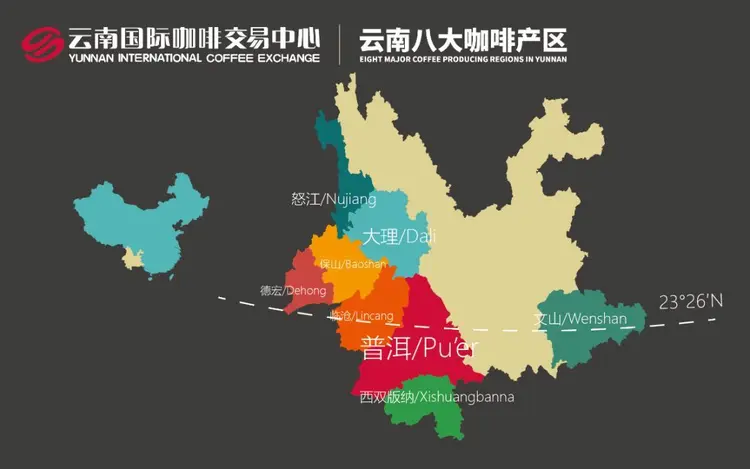
Yunnan's four major growing regions offer a surprising diversity of terroir.
History: 1,000 Years vs 300 Years vs 40 Years
🇪🇹 Ethiopia
Coffee culture in Ethiopia is ancient. The legend of Kaldi and his dancing goats dates to the 9th century — but coffee cultivation likely predates recorded history. Coffee ceremonies are a daily ritual in Ethiopian households, and the country is the only origin in the world where coffee is considered a national birthright, not a cash crop. Ethiopia also grows certified forest coffee — beans harvested from wild coffee trees in protected forests.
🇧🇷 Brazil
Coffee arrived in Brazil in 1727, smuggled from French Guiana. By the 1800s, Brazil was the world's dominant coffee power — and slavery was the engine. The country's coffee history is complicated: incredible agricultural achievement built on immense human suffering. Today, Brazil produces 1 in every 3 cups of coffee drunk globally.
🇨🇳 Yunnan
Yunnan's modern coffee story began in 1988 when Nestlé launched large-scale cultivation. Before that, coffee existed — French missionaries planted the first trees in 1892 — but it was a curiosity, not an industry. The real transformation happened after 2010, when international experts recognized Yunnan's specialty potential. In just 15 years, Yunnan went from commodity-grade to winning international awards.
Which Should You Choose?
🇪🇹 Choose Ethiopia if…
- ✓ You love bright, complex, floral coffee
- ✓ You enjoy tasting notes you can study and discuss
- ✓ You want to experience coffee's true birthplace
- ✓ You're willing to pay premium for singular flavor
- ✗ Can be too acidic for some palates
- ✗ Light body feels thin to dark roast fans
- ✗ Entry-level specialty is $18+/lb
🇧🇷 Choose Brazil if…
- ✓ You want consistent, crowd-pleasing flavor
- ✓ You prefer smooth, low-acid coffee
- ✓ You're buying for espresso blends
- ✓ You want excellent value at mid-range prices
- ✗ Less exciting for adventurous drinkers
- ✗ Lower altitude limits complexity
- ✗ Mass production = less unique character
🇨🇳 Choose Yunnan if…
- ✓ You want smooth, chocolatey, easy-drinking coffee
- ✓ You love exploring an origin before it's discovered
- ✓ You want excellent value — similar quality, lower price
- ✓ You're fascinated by the tea-coffee crossover story
- ✗ Catimor can have a slight bitterness if poorly processed
- ✗ Quality varies significantly by producer
- ✗ Availability still limited outside Asia
Where Yunnan Fits in the Global Coffee Landscape
If you're a coffee professional, here's the honest assessment: Yunnan isn't yet competing with top-tier Ethiopian Geishas or Brazilian Cup of Excellence winners. But it doesn't need to.
Yunnan's real strength is in the mid-range specialty market — the $12–18/lb bracket where most specialty consumers actually shop. In that bracket, Yunnan holds its own against:
- Entry-level Ethiopian Yirgacheffe — Yunnan can't match the floral complexity, but it offers more body and consistency
- Mid-range Brazilian Pulped Natural — Yunnan offers similar sweetness and body with more interesting origin character
- Mass-produced Colombian Excelso — Yunnan is often more affordable with comparable quality
For home brewers, here's the practical takeaway: Buy Yunnan as your daily driver — it's affordable, versatile (works for pour-over, French press, and espresso), and consistently pleasant. Save Ethiopian for special mornings when you want something extraordinary. Use Brazilian for your espresso blend base.
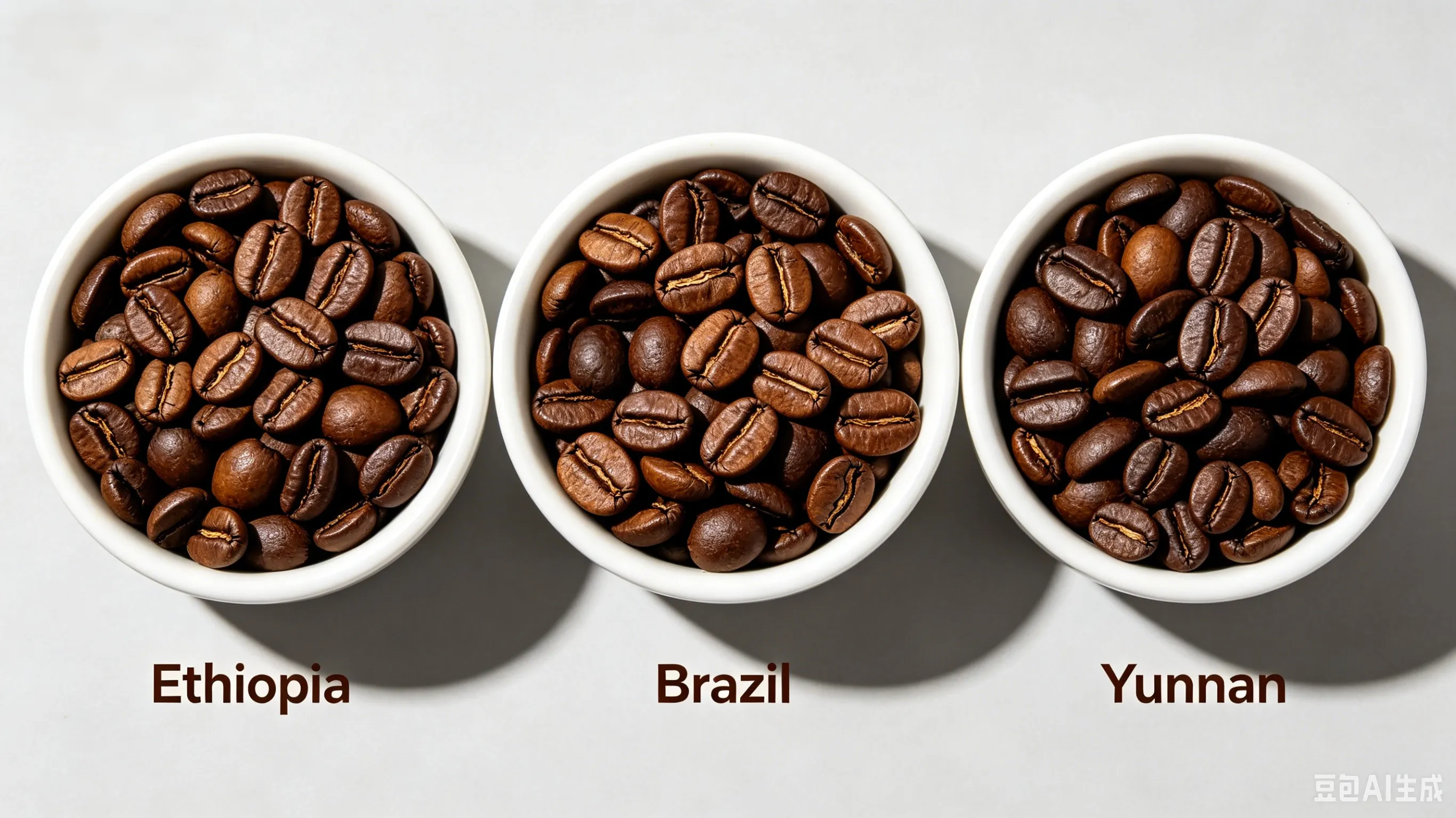
Yunnan's Catimor beans (right) vs Ethiopia's heirloom (left) and Brazil's Mundo Novo (center) — different shapes, different stories.
Home Brewing Guide: How to Brew Each Origin
Each origin shines with a different brewing approach. Here's a quick guide:
| Brewing Method | 🇪🇹 Ethiopia | 🇧🇷 Brazil | 🇨🇳 Yunnan |
|---|---|---|---|
| Pour-Over (V60) | ⭐ Excellent — highlights floral notes | ⭐⭐ Good — clean, balanced cup | ⭐⭐⭐ Best — brings out chocolate sweetness |
| French Press | ⭐⭐ Good — but loses some acidity | ⭐⭐⭐ Best — full body shines | ⭐⭐⭐ Excellent — creamy, satisfying |
| Espresso | ⭐ Can be too acidic | ⭐⭐⭐⭐ Best — classic espresso base | ⭐⭐⭐⭐ Excellent — chocolate, crema |
| Cold Brew | ⭐⭐ Great — surprisingly smooth | ⭐⭐⭐ Excellent — naturally sweet | ⭐⭐⭐ Excellent — chocolate forward |
| Aeropress | ⭐⭐⭐⭐ Excellent — clean, bright cup | ⭐⭐ Good — consistent | ⭐⭐⭐ Great — balanced, versatile |
Final Verdict
Here's the truth: Yunnan, Ethiopia, and Brazil are not competitors. They're different tools for different jobs.
- Ethiopia is the experience — the coffee you brew when you want to be transported.
- Brazil is the foundation — the coffee you brew when you want reliability and comfort.
- Yunnan is the discovery — the coffee you brew when you want something new, affordable, and genuinely interesting.
What makes Yunnan exciting is not that it's "better" than Ethiopia or Brazil. It's that it offers something different — a unique origin story rooted in ancient Chinese tea culture, a flavor profile shaped by Catimor's surprising potential, and a quality-to-price ratio that's hard to beat.
If you've only ever explored the classic origins, Yunnan will surprise you. The question isn't "Is Yunnan as good as Ethiopia?" — it's "Are you ready for something new?"
| 🇪🇹 Ethiopia | Best for: Floral, complex, bright cups · Premium price · Pour-over/V60 |
| 🇧🇷 Brazil | Best for: Consistent, smooth espresso base · Mid-range price · Espresso/French Press |
| 🇨🇳 Yunnan | Best for: Chocolate, smooth, great value · Budget-friendly · All methods |
— The Yunnan Coffee Guide Team