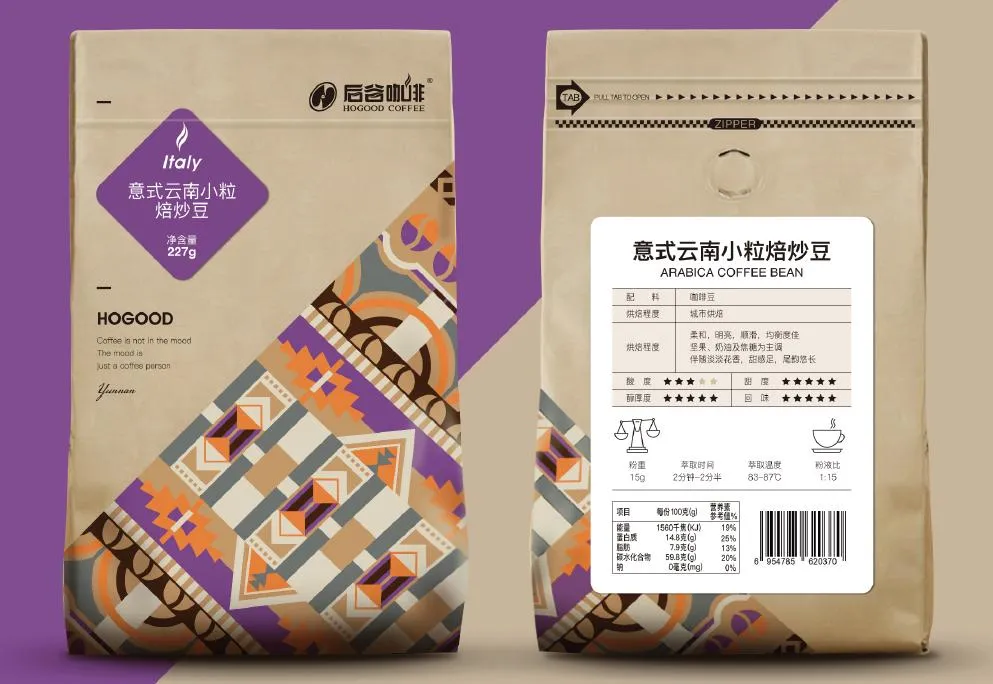
You're holding a bag of coffee. There's text all over it. Here's what to actually look at.
Most of the information on a specialty coffee bag is useful. Some of it is marketing. Here's how to tell the difference in about 30 seconds.
🔴 Roast Date — This Is Everything
The roast date tells you when the beans were roasted. Coffee peaks 5-14 days after roasting and declines after 4 weeks. If there's no roast date — only an expiration date — the roaster is hiding the bean's age. Put it back. More on coffee freshness.
🌡️ Roast Level
Tells you how dark the beans were roasted. The biggest factor in taste. Most bags list it clearly. If they don't, look at the beans through the one-way valve — darker = longer roast. Full light vs dark breakdown.
🏔️ Altitude
Higher altitude = denser beans = more complex flavor. 1,200m+ is good. 1,600m+ is excellent. Below 800m is usually commercial grade. Good indicator of quality, but not a dealbreaker.
🌊 Processing Method
How the fruit was removed from the bean:
- Washed: Clean, bright, acidic. Most common in specialty.
- Natural: Fruity, fermented, sweet. More body.
- Honey: In between. Silky body.
🍫 Tasting Notes
These are real descriptors from professional cuppers. They're not marketing fiction — but they're not guarantees either. Your ability to taste them depends on your brewing method and experience.
Use them as a vibe check. If "blueberry, jasmine, lemon" sounds good, buy it. You'll taste something in that direction with fresh beans and decent technique.
🌍 Origin / Farm
The more specific, the better. "Yunnan, China" is decent. "Baoshan, Cloud Mountain Farm, Catimor, 1,500m" tells you the roaster knows their source. That's a quality signal.
📋 5-Second Cheat Sheet
When you pick up a bag in the store:
- Find the roast date — no date = put it back
- Check the roast level — does it match your preference?
- Note the altitude — 1,200m+ is a good sign
- Read the tasting notes — does it sound good to you?
- Look for specifics — farm name, region = quality signal
🎯 The 80/20 rule: 80% of a good purchase is just the roast date. Is it fresh? Buy it. The rest is optimization.
❓ Frequently Asked Questions
The roast date. Without it you have no idea how old the beans are. Everything else is secondary.
Yes, but treat them as a vibe check. Fresh beans brewed well should taste roughly like what's described, but don't stress if you don't taste "red apple."
How the fruit was removed. Washed = clean, bright taste. Natural = fruity, sweet. Honey = in between. More on choosing beans.
Yes. If only an expiration date is shown, the roaster is hiding the age. Pass.
🛒 Shop Fresh Coffee
Beans with visible roast dates and clear origin info:
As an Amazon Associate, I earn from qualifying purchases.
📖 Keep Reading
Affiliate Disclosure: Some links are Amazon affiliate links. If you purchase through them, I earn a small commission.
Roast Level Labels: What They Actually Mean
Roasters use different terms for roast levels. Here’s a translation guide:
| Label | Actual Roast Level | Best For |
|---|---|---|
| Light / Cinnamon / New England | Light | Pour-over, AeroPress (high-acid origins like Ethiopia) |
| Medium / City / American | Medium | Versatile — works for most brew methods |
| Medium-Dark / Full City | Medium-dark | Espresso, French press, milk drinks |
| Dark / French / Italian / Espresso | Dark | Espresso, milk drinks (masks origin character) |
For Yunnan beans specifically, we recommend medium roasts. Light roasts can bring out the acidity and fruit notes, but medium roasting highlights the chocolatey, nutty character that Yunnan Catimor does best. Dark roasting tends to make Yunnan taste generic and sacrifices the unique qualities that make Yunnan interesting.
Agtron Numbers: The Scientific Roast Scale
Some specialty bags include an Agtron number (e.g., “Agtron #55”). This measures the internal colour of the bean using a spectrophotometer. The scale runs from 0 (black) to 100 (raw bean). A lower number means a darker roast. For Yunnan beans, Agtron #55–65 (medium roast) is the sweet spot.
What About “Single Origin” vs “Blend”?
Single Origin means all the beans come from the same geographic region (sometimes the same farm). The flavour reflects that specific terroir. Blend means beans from multiple origins are combined to create a consistent, balanced flavour profile that a roaster can reproduce year-round regardless of harvest variations.
Yunnan single-origin is an excellent choice if you want to understand what Chinese specialty coffee tastes like. Yunnan also works well in blends — its chocolatey profile complements bright Ethiopians or acidic Colombians beautifully.
Decoding Yunnan Coffee Labels
Yunnan labels have some unique elements. Here’s what to look for:
- COE (Cup of Excellence) — If the bag says “COE Winner” or “COE Lot,” it’s been through the rigorous COE competition and scored among Yunnan’s best. These are premium lots.
- Catimor vs Typica — Most Yunnan coffee is Catimor (a hybrid of Caturra and Timor). Some farms grow Typica, which is rarer and often more expensive. If the label says “Typica,” expect a cleaner, sweeter cup.
- Processing note — “Washed” is standard. “Natural,” “Honey,” or “Anaerobic” indicates experimental processing — these are usually from progressive farms in Baoshan or Pu’er.